
At a glance
Decide whether this tool belongs on the shortlist
Verdict
WinningHunter is most useful when an active Shopify, TikTok Shop or paid-social operator needs to connect an ad to the advertiser, store, product, competitors and a tracking workflow.Best for
Paid-social sellers researching products every week · Shopify operators connecting ads to stores and competitorsWatch first / not ideal for
Revenue, traffic, sales and ad-spend figures may be estimates · Some results contain incomplete store or performance fieldsStarting price
Basic: $49/month; Standard: $79/month; Enterprise: $249/monthNext action
Check current plansQuick Verdict
My buying question is narrower than whether WinningHunter has a large library: can it turn one promising creative into a traceable research file that changes the next action? That is the job I would pay for.
The product's differentiator is the handoff between entities: begin with an ad, identify the advertiser, inspect the store and product, follow related competitors, then leave a record for the next check. That chain is more useful than a single estimated sales number.
I would shortlist it for a paid-social or Shopify team with a weekly product brief. I would not buy it for an occasional idea hunt, an Amazon-only operation or a team that needs accounting-grade demand data.
| Buying question | Evidence I would require |
|---|---|
| Can I start from the right signal? | The required ad channel, market and history are available |
| Can another operator follow the trail? | Advertiser, store, product and related records remain connected |
| Can I monitor a shortlist? | Tracking limits and refresh behavior fit the weekly cadence |
| Can I defend the conclusion? | Dates, estimate labels and source links are retained |
| Does it earn its fee? | One completed brief ends in a clearer keep, reject or validate decision |
These are account-level checks, not assumptions from a feature list.
- My recommendation
- Use one known category to prove the full handoff
- Commercial rule
- Pay for a repeatable decision record, not a bigger feed
Start with the least expensive plan that completes that handoff. Move up only when a named channel, market, tracking limit or team handoff is the actual blocker.
What Is WinningHunter?
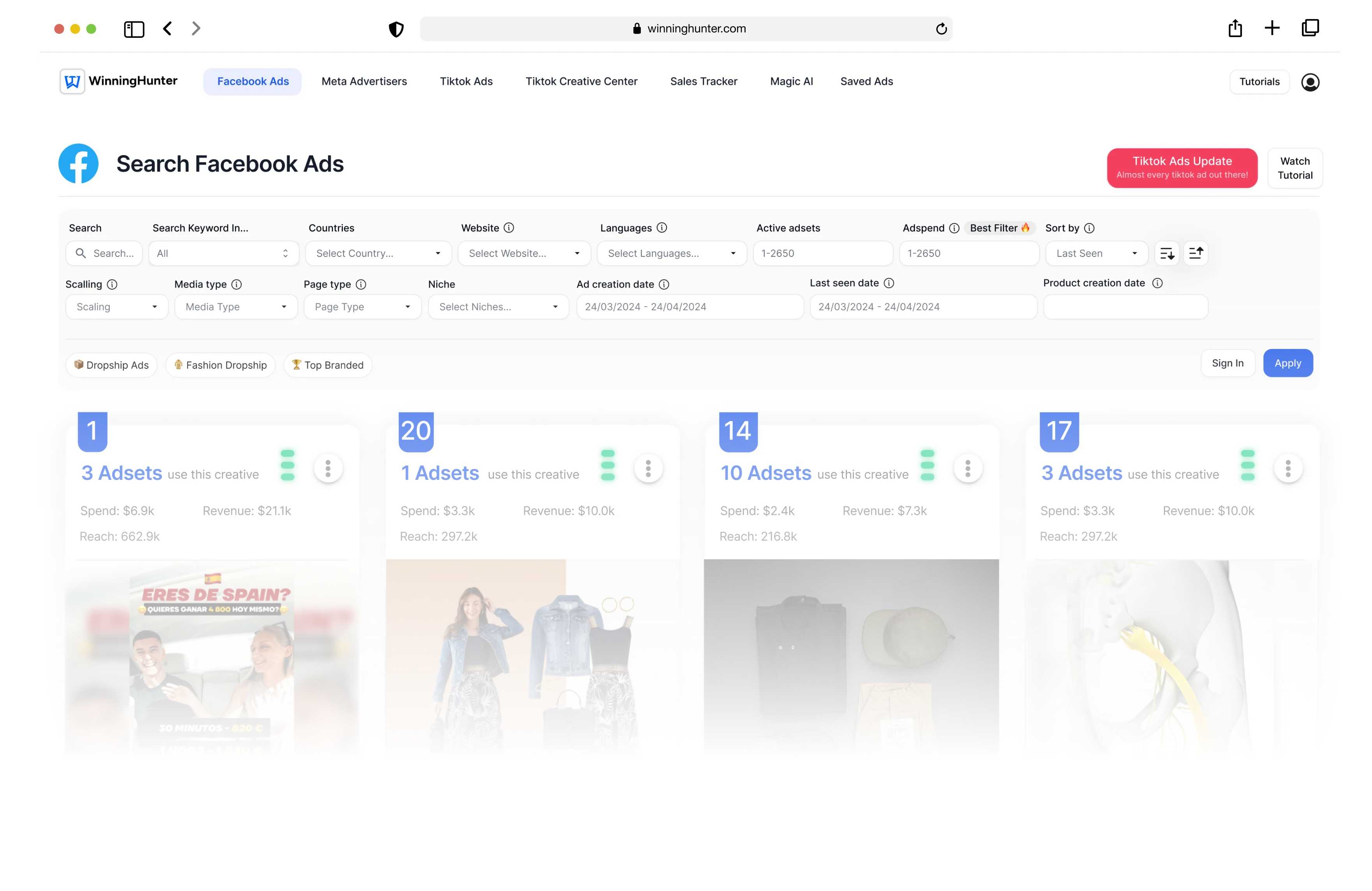
WinningHunter is an ecommerce intelligence platform positioned around advertising and store research. Public product information describes a path through:
- Facebook and Instagram ad research
- TikTok and Pinterest ad research where supported
- Advertiser and creative investigation
- Shopify store and product context
- Store or brand monitoring paths
- TikTok Shop research where the current account includes it
- Search and discovery features described on the live product pages
I would judge that scope by the path from an ad into the advertiser, store, product and follow-up record. A database-size headline or an unverified feature label is not a decision by itself.
What the Public Record Can Actually Support
This review treats WinningHunter as one research product, even when searchers describe the job as ad spying, product hunting, store research or TikTok Shop discovery. The relevant question is the workflow those labels produce, not the label itself.
The available evidence supports a screening and investigation opinion. It can describe vendor-stated modules, public plan amounts, visible research paths and the checks a buyer should perform. It cannot establish supplier quality, contribution margin, platform approval, account performance or permission to reuse another seller's creative.
Who WinningHunter Is Really Built For
WinningHunter is strongest when you:
- Sell low- or mid-ticket consumer products
- Rely on Meta or TikTok advertising
- Test products and creatives frequently
- Research Shopify competitors
- Operate TikTok Shop in supported markets
- Manage research for multiple stores or clients
It is less useful for Amazon search, Google Shopping, established-SKU catalogs or long buying cycles. Amazon sellers still need marketplace keyword, ranking, PPC and FBA tools.
Representative Workflow: Outdoor Artificial Flowers
A useful representative brief could use outdoor artificial flowers in the United States. This is an evaluation example, not a reported sales or performance result.
The goal of this representative brief is not to treat the highest estimated revenue as a winner. It is to see whether the described workflow can move an operator from product discovery to advertiser, store, competitor and tracking questions without hiding the checks that remain open.
| Test item | Test detail |
|---|---|
| Access level | Product research workflow |
| Category | Outdoor artificial flowers |
| Market focus | United States |
| Search term | Artificial hanging flowers |
| Product examined | Artificial hanging morning-glory planter |
| Product decision | Creative research shortlist |
| Inventory decision | Further logistics and margin checks required |
The complete hanging planter works visually because it offers:
- A clear before-and-after transformation
- A simple no watering required message
- Seasonal outdoor-decoration demand
- Several home and garden use cases
What the research path can support
The result provided actions such as:
- View Store Details
- Find Similar Ads
- Find Competitors
- Track Store
- Track Brand
- Open the original advertising source
The connected path is the clearest potential advantage. Without it, an operator would need to identify the advertiser, locate the store and product, search related ads and create a monitoring record separately. The current account and plan still need to prove which of those steps are available in the target market.
Where the result fell short
Some store and performance fields were unavailable, preventing a full comparison. I would not use the result to validate demand, but I would save the creative angle.
The result was still useful for positioning, advertising hooks and competitor ideas.
Official Product Visuals
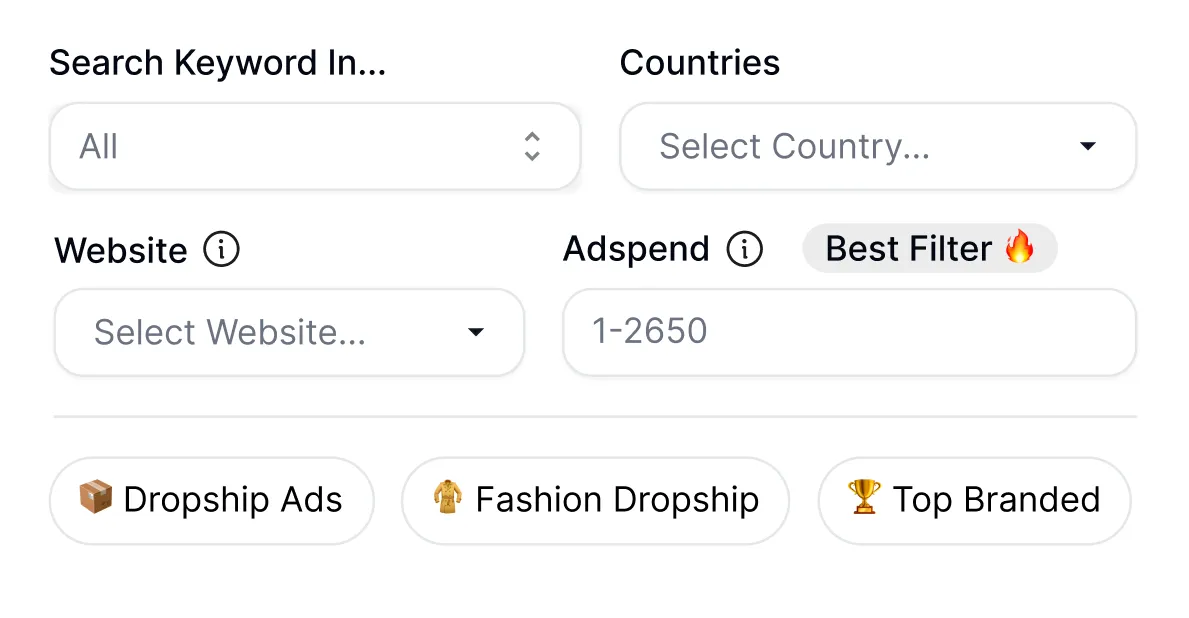
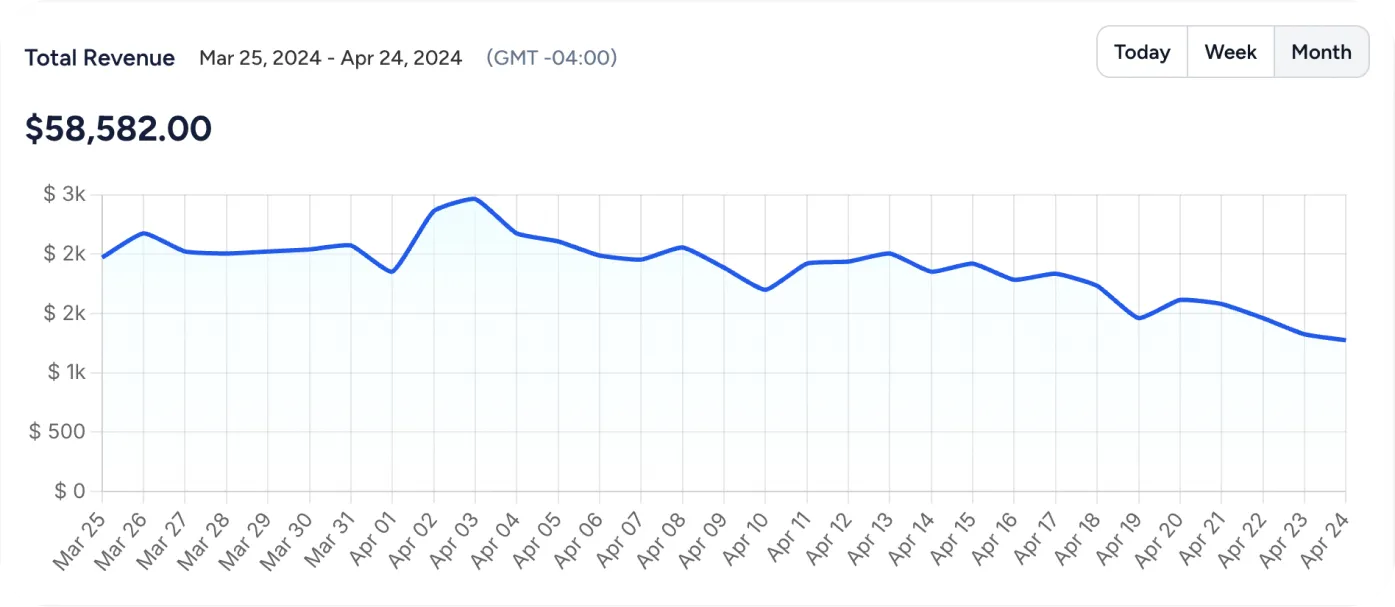
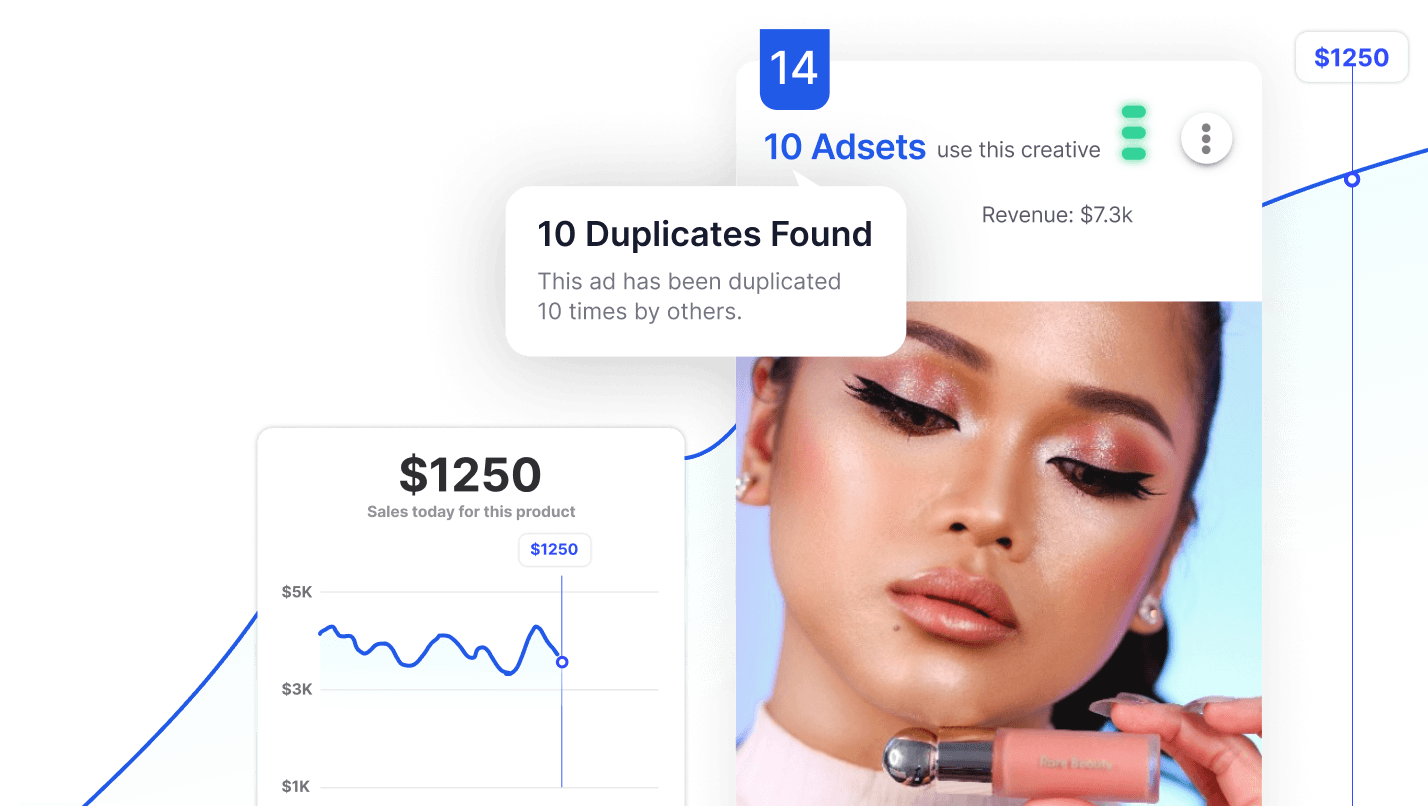
These vendor-published visuals show the product surface and workflow framing described on WinningHunter's current official site. They are source evidence, not independent screenshots captured from a paid account; confirm the live interface and plan access before relying on a feature.
The Product I Would Actually Test
The hanging planter is a useful creative lead, but it is a poor first inventory commitment. The physical format creates questions that an ad database cannot answer:
- Volumetric shipping costs
- Packaging expenses
- Damage risk
- Warehouse requirements
- Fulfilment costs
- Return expenses
I would keep the porch-transformation angle and look for a lighter product that carries the same promise:
- Transform an empty porch
- Outdoor flowers without watering
- Seasonal decoration without maintenance
- Colour that lasts through hot weather
The reopen conditions
I would return to the full planter only after a supplier confirms protective packaging, a landed-cost sheet survives a return scenario and the ad record shows more than one distinct creative angle. A lighter bouquet or modular set would get the first sample order because it preserves the message with less fulfilment exposure.
The stop rule is equally clear: reject the inventory test when the sample is materially weaker than the creative, parcel cost removes the contribution margin or the market is repeating one crowded execution.
How I Turn a WinningHunter Record Into a Test Decision
I do not score a product from one dashboard field. I use the record as a five-gate queue: each gate either earns the next check or stops the candidate.
1. Recency has to become a question
An active or recently observed ad earns a closer look, but its age is not proof of profitability. I note the observation date and ask what changed around the creative, offer or store.
2. Variation has to be visible
I look for different hooks, openings, demonstrations, offers or landing pages. Several distinct executions tell me more about the advertiser's learning process than a repeated count.
3. The store has to carry the story
The product page, offer, bundles and related assortment should explain why the ad exists. If the store trail is incomplete, I mark the record as a creative lead rather than a product thesis.
4. Distribution has to be plausible
I check whether the signal appears across more than one advertiser, store or creator. Concentration may still be interesting, but it tells me the opportunity depends on a specific operator or content advantage.
5. Operations must close the file
This is outside WinningHunter. Before a sample order, I still check:
- Product cost
- Parcel size and weight
- Delivery time
- Gross margin
- Return risk
- Supplier reliability
- Product quality
- Intellectual-property risk
- Content-production difficulty
- Platform restrictions
The flower record at a glance
| Gate | Editorial action |
|---|---|
| Recency | Keep the observation dated; do not call it demand proof |
| Variation | Collect related creative before copying a hook |
| Store trail | Treat incomplete fields as an open question |
| Distribution | Check competing advertisers and offers |
| Operations | Reject the full planter until parcel risk is priced |
| Decision | Save the angle; do not order the planter |
My 30-Minute WinningHunter Research Workflow
A useful research session should end with a decision, not hundreds of saved products.
Minutes 0-5: Define the market
Choose the target country, category, price range, traffic source and acceptable shipping profile.
Minutes 5-12: Filter the ads
Look for ads running for at least seven days, advertisers using multiple creatives, visually demonstrable products and stores that remain active. Do not sort only by estimated revenue.
Minutes 12-20: Investigate the business
Open three to five advertisers and check:
- Store activity
- Related ads
- Current offers
- Similar advertisers
- Whether new creatives are still appearing
Minutes 20-25: Apply the framework
Score ad longevity, creative expansion, store commitment, market distribution and operational fit.
Minutes 25-30: Make a decision
End with one of three outcomes:
- Reject
- Save for creative research
- Move to supplier and margin validation
If you finish with 50 saved products and no decisions, the tool has created more work instead of saving time.
Where WinningHunter Earns Its Subscription - and Where It Does Not
Connected ad-to-store research
WinningHunter can reduce the fragmented work required to move from a creative into the advertiser, store, product, related ads and tracking.
Ecommerce-specific filtering
The current product and plan pages should be checked for TikTok, Pinterest, TikTok Shop, trend and filter access. I would record the exact fields visible in the account instead of carrying a plan promise from an older review into a new purchase decision.
Competitor tracking
I care more about what a competitor keeps doing than one estimated monthly revenue number. Tracking can reveal new creatives, offers and products, but some results still lack complete store or performance depth.
The limit that changes my verdict
Popular searches expose the same obvious products to every user. The advantage comes from better filters, original interpretation and faster rejection, not copying the feed.
How Accurate Is WinningHunter?
I divide WinningHunter's information into two groups.
Useful operating signals
- Ad activity
- Creative variations
- Store activity
- Product listings
- Relative growth
- Continued competitor investment
Estimated financial data
- Revenue
- Advertising spend
- Traffic
- Exact product sales
- Profitability
WinningHunter describes its TikTok Shop revenue data as estimated. Treat precise accuracy percentages as vendor claims and use the figures for directional comparison rather than accounting or inventory decisions.
Use financial estimates to compare opportunities, not to calculate expected profit.
WinningHunter Pricing, Trial Terms and Plan Limits
| Plan question | Why it matters |
|---|---|
| Channel access | The brief may depend on a specific ad or marketplace source |
| History and filters | A current record alone may not explain direction |
| Store and tracking limits | Monitoring is useful only when the team can keep it current |
| Seats and exports | A handoff needs evidence another operator can review |
Check the live official pricing page for current plan names, prices and limits.
Entry access
Use the lowest current access only when it completes the known-product and known-advertiser brief. If the required market, history or export is missing, a low price does not make the workflow useful.
Working access
Choose a broader current tier only when recurring research needs its additional channels, filters, history, tracking or seats. I would verify those limits in the account before describing the tier as the default choice.
Team access
Team or higher access belongs to a named multi-store or agency workflow with shared records and a clear owner. A larger allowance is not a reason to subscribe when the research brief is still undefined.
Start with the shortest available commitment and judge the first billing cycle by completed briefs, rejected opportunities and decisions that another operator can review.
See the public $49, $79 and $249 snapshot, billing notes and plan questions to verify.
The Trade-Offs for a Weekly Research Team
The subscription makes sense when a team repeats the same investigation and needs a shared record. It is harder to justify when the work is sporadic or every conclusion still has to be rebuilt manually.
| What I would pay for | What I would still own |
|---|---|
| Connected ad, advertiser, store and product paths | Supplier, margin and fulfilment validation |
| Filters and history that match the brief | A dated record of the filters and sources used |
| Store and brand monitoring | The decision to keep, reject or retest a candidate |
| A reusable research handoff | Independent checks of estimates and claims |
| Faster creative and competitor discovery | Original positioning and compliant execution |
WinningHunter Compared with the Current Shortlist
This is a directional comparison rather than a full side-by-side test.
- WinningHunter: use when advertising activity needs to connect to Shopify-oriented product, store and competitor research.
- Kalodata: use when the primary record is a TikTok Shop product, shop, creator, video or livestream.
- PipiAds: consider when ad discovery and creative pattern research are the central job.
- ShopHunter: consider when the brief starts with a known Shopify store and its assortment or offers.
The choice follows the starting entity. I would not buy a second dashboard until the current brief shows a missing channel, market or record that the alternative can actually close.
Compare an advertising-first research workflow before paying for overlapping subscriptions.
Use a dated category-monitoring path when the question is trend direction rather than ad retrieval.
Compare a store-first workflow when a known Shopify domain is the starting point.
When WinningHunter Earns a Place in the Stack
WinningHunter earns a place in the stack when it shortens repeated ad-to-store research, helps reject weak opportunities and leaves a monitoring record another operator can use.
Review the subscription after the first billing cycle. Pause or cancel when the team cannot point to completed briefs, clearer follow-up checks or a decision changed by the record.
Final Verdict
I would keep WinningHunter in a paid-social or Shopify team's shortlist when the recurring problem is tracing advertising activity into a defensible store and product brief. I would not treat it as a profitability engine, a supplier check or a substitute for platform-native evidence.
The purchase decision is simple: run one known-category brief, record what the account cannot retrieve and measure whether the resulting file changes the next action. If it does, choose the smallest plan that supports the cadence. If it does not, the public feature list is not enough reason to renew.
- Best fit
- Weekly ad-to-store investigation for Shopify and paid-social operators
- My recommendation
- Validate one complete brief before a longer commitment
Questions to settle before acting
No. It can identify products, ads, stores, competitors and market signals. Profitability still depends on sourcing, margins, logistics, content and execution.
It can help research products, shops, creators, categories, sales velocity and growth patterns across supported markets. Confirm the current market and plan coverage before subscribing.
The review uses a representative ad-to-store research brief and states where current account access is still required. It does not present a vendor estimate as a verified sales or profitability result.
Its activity and competitor signals are useful for comparisons. Revenue, traffic, sales and ad-spend figures should be treated as estimates.
Pricing and plan names can change. Check the official destination for the current amount, billing term, market access, history, exports and cancellation conditions before subscribing.
Trial availability and eligibility need a current official check. Treat an advertised trial as an invitation to test the brief, not as proof that every channel or limit is included.
The workflow includes store and brand tracking paths. Use them to monitor changes and creative activity, but verify important commercial claims with the store and first-party evidence.
No. WinningHunter AI can support discovery, but the operator still needs to check margin, shipping, supplier quality, policy and the originality of the creative plan.
Use the official WinningHunter site for account access. I do not treat a login page as evidence that a plan includes a particular feature or market.
Choose the lowest current tier that completes the normal research brief. Move up only when a named market, history, export, channel or seat requirement justifies it.
It may help with external advertising and competitor discovery, but it does not replace Amazon keyword, PPC, ranking and FBA tools.
Evidence and Official Sources
These records separate public evidence, vendor statements, live checks and editorial interpretation. Dates show when I last checked each source.
Vendor-stated
WinningHunter is positioned for product, advertising and store research.
Boundary: Current filters, history and estimates must be checked in the subscribed plan.
Sources: WinningHunter official site
Editorial interpretation
Shopify and TikTok Shop operating facts should be verified with official platform information.
Boundary: A third-party research record is not a platform account record.
Source register (3 official sources)
Related research paths
Ecommerce research platforms may show modeled or estimated data. Use their signals to build a shortlist, then verify demand, margin, supplier risk and platform policy with current first-party evidence. In this WinningHunter review, treat activity and trend figures as directional until the current source and operating evidence agree.