
At a glance
Minea: Meta research, pricing and limits
Best for
Recurring Meta creative and product screening · Image-led competitor discoveryWatch first / not ideal for
Non-Meta access needs confirmation · AI allowances and unverified store estimatesStarting price
$49/month Starter · checked October 21, 2026Next action
Check current plansQuick Verdict
I would shortlist Minea for Meta creative and product screening, but choose WinningHunter when recurring ad-to-store research and its explicitly listed channel tiers better match the brief.
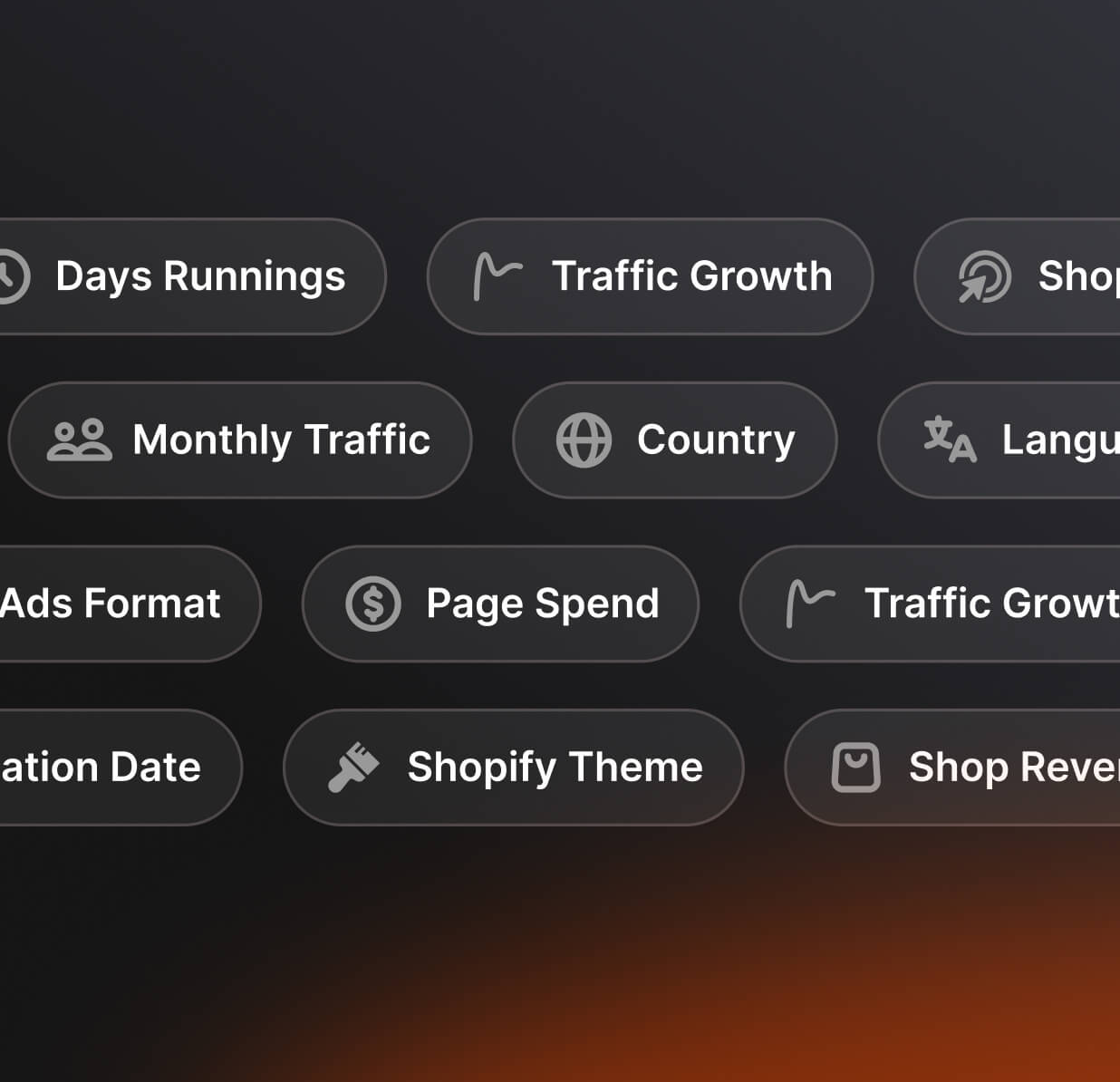
Minea features: Meta ads, products and shop research
Minea presents itself as an ad and product research platform. Its public material connects ad discovery, product and shop listings, competitor monitoring and image-based Magic Search. The pricing table explicitly lists Meta ads. That connection matters more to a product brief than ancillary offers or a headline database size.
For a paid-social seller, the useful output is a product hypothesis with supporting links. A saved advertisement can reveal a demonstration, objection or bundle worth studying. The next step is opening the real destination and asking whether the offer, delivery promise and product economics could work in your own operation.
Who should pay for Minea — and who should skip it
Minea belongs on the shortlist for a Shopify seller producing regular Meta creative briefs across several candidate products. That seller has a recurring discovery problem and a separate budget for samples, original content and limited advertising tests. Filters and image search have a purpose when they reduce an otherwise repetitive investigation.
An established brand with a small SKU range has a different use case: compare demonstrations, objections and offers around products it already sells. It should evaluate competitor monitoring and creative relevance, not chase every item promoted as a winner. A dropshipper also needs supplier consistency and delivery costs checked before adding a product to the store.
I would skip Minea for an occasional competitor lookup or an Amazon-only inventory decision. Marketplace search demand, FBA fees and stock risk need other inputs. TikTok Shop sellers primarily selecting creators should check creator-specific commerce evidence; a library of ads does not establish commissions, affiliate sales or the suitability of a creator partnership.
What this evaluation actually covers
I checked Minea's public homepage, official pricing and the vendor visuals shown here on October 21, 2026. I also checked WinningHunter's public plans for the alternative recommendation. This is a public-source assessment with operator judgment, not a paid-account walkthrough.
I did not run searches in an authenticated Minea account, measure coverage, validate shop revenue or test exports and support. No search count, shortlist size or time-saving result is reported. The example below is a proposed purchase test, not a completed customer case.
| Evidence available | What it supports | What remains untested |
|---|---|---|
| Official pricing table | Published plans and named allowances | Checkout totals, taxes and account eligibility |
| Homepage and product visuals | Advertised research paths and interface concepts | Coverage, current results and field reliability |
| Operator evaluation | A proposed validation sequence and buying conditions | Measured savings or commercial outcomes |
A cable-organizer brief: from ad to supplier question
Illustrative scenario: a US Shopify seller of desk accessories notices a cable-organizer demonstration and wants to investigate the angle. The starting evidence is the product image, advertiser identity and landing-page URL. The objective is to decide whether to request a supplier sample, not to produce a list of supposedly profitable stores.
First, use the relevant Meta listing or advertised image-search path to find related creatives. Set the country and other available filters to the brief, then record those settings. Identify whether each result promotes the same product, a similar use case or an unrelated accessory. Similar packaging is not enough to treat two items as substitutes.
Next, open the advertiser and its actual storefront. Check the cable sizes supported, bundle quantity, visible price, delivery promise and return terms. A reusable clip and a disposable adhesive holder may solve the same visible problem but carry different replacement and complaint risks. Those details change the supplier questions.
Then compare distinct advertisers and revisit relevant records. Keep the creative concept if it communicates a useful problem clearly; reject the product if adhesion, material quality or shipping requirements cannot be validated. If the live offer and supplier sample remain credible, move to a small original-content test with a defined loss limit.
The working record should contain source links, observation dates, unresolved questions and one next action. A session that ends only with more bookmarks is unfinished. Before renewing, check whether the tool consistently helps produce that decision record with less manual reconciliation.
Use the full process for landing-page, supplier and margin checks.
From an interesting ad to a product worth sampling
A popular ad and an attractive product are different findings. These five checks separate creative inspiration from a product worth investigating. These are evaluation criteria, not claims that every field is available in every Minea plan.
| Signal | Meaning to investigate | Decision boundary |
|---|---|---|
| Ad longevity | Repeated dated activity can justify a revisit | An active ad does not prove continuous profitable spend |
| Creative expansion | New hooks or demonstrations can reveal objections | Count distinct ideas rather than duplicated uploads |
| Store commitment | Bundles, product pages and offer updates show merchandising effort | Check the live storefront; a saved record can be stale |
| Market distribution | Several independent advertisers suggest a broader research opportunity | Related stores can belong to one operator; avoid double-counting |
| Operational fit | Weight, materials, landed cost and content needs shape feasibility | Reject an item that cannot meet your margin or quality requirements |
For the cable organizer, adhesion and device compatibility matter more than a high engagement figure. A strong visual demonstration can still be useful as creative research even when the supplier cannot meet the required quality. Keeping the idea and rejecting the SKU are compatible outcomes.
Minea Magic Search and AI usage limits
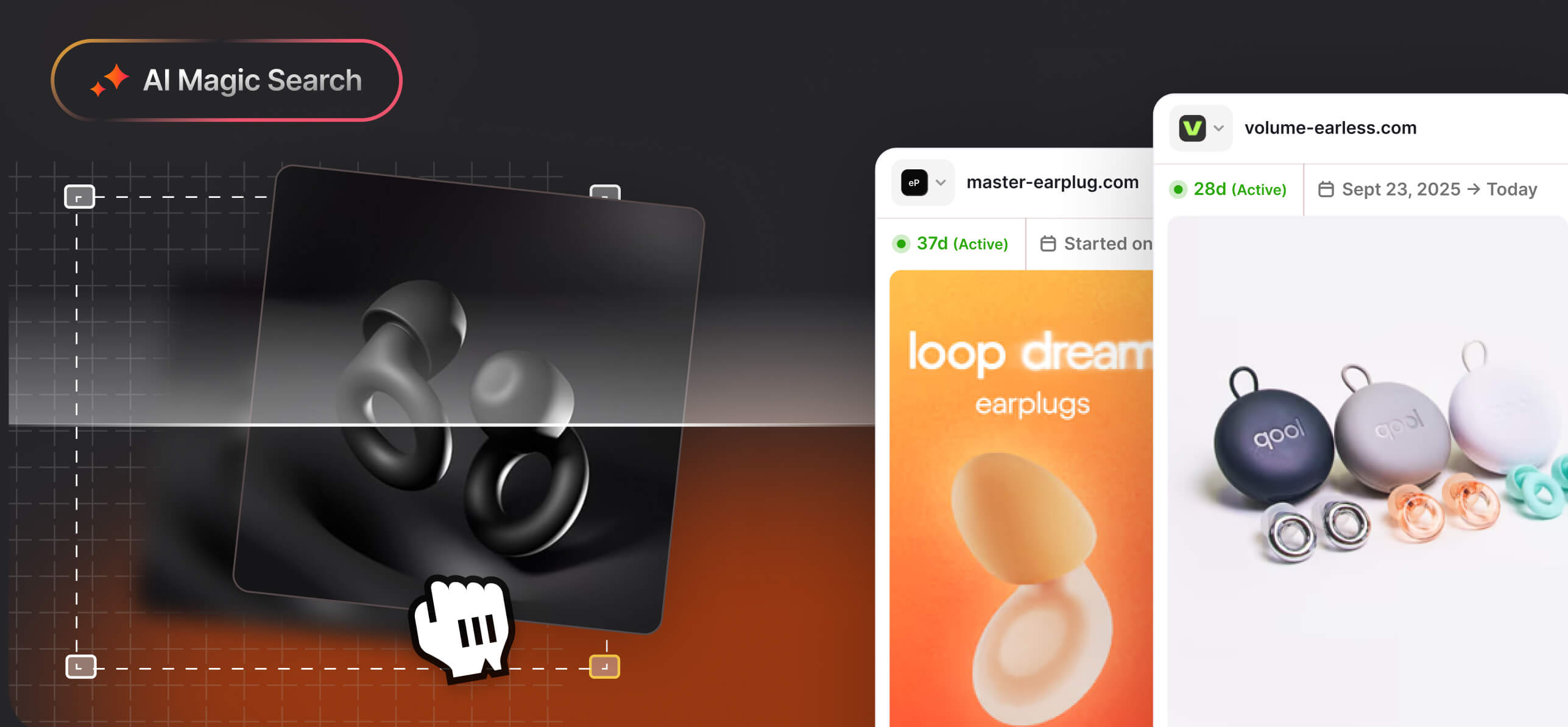
Minea promotes starting from an image to find related ads and creatives. Its published Magic Search allowances are 50 per month on Starter, 100 on Premium and unlimited on Business. This path is most relevant when a product image identifies the item better than a generic keyword; the destination and product match still need a manual check.
The official pricing table separately lists AI ad analysis and AI transcripts. Each has 10 monthly uses on Starter and 50 on Premium; Business lists unlimited. A transcript can help examine a hook, but it does not verify the claims spoken in the ad. An AI interpretation also cannot establish conversion rate or explain why a competitor kept spending.
Test whether the output adds a useful observation before buying a larger allowance. If the relevant observation is already visible in a short creative, automated analysis adds less value. If a recurring brief depends on reviewing many demonstrations, the quality of transcripts and the definition of a counted use become buying questions.
Minea accuracy and unconfirmed channel access
Minea's homepage promotes shop traffic, revenue and advertising insights. Without a validated first-party connection or a documented accuracy test, treat financial and traffic figures as directional estimates. They can help prioritize a closer look; they cannot establish a competitor's profit, refunds or acquisition costs.
There is also a public channel ambiguity. The pricing cards explicitly name Meta, while lower copy on the same page describes Snapchat, Pinterest and TikTok ads as coming soon. Other marketing discusses broader research. That conflict leaves non-Meta availability unconfirmed; neither a promise of full access nor a claim of complete absence is justified.
Before subscribing for a non-Meta workflow, ask Minea to demonstrate the exact channel, country and date range in the intended plan. TikTok ad discovery and TikTok Shop transaction research are separate jobs. For Meta research, use the official library to corroborate advertiser identity and visible ads rather than treating a third-party record as the final authority.
Minea pricing: which plan would I buy?
The official pricing page checked October 21, 2026 lists the following USD prices. Quarterly figures are displayed monthly equivalents for a longer billing commitment, not monthly-contract prices. I have not verified annual totals or account-specific checkout terms, so those are not substituted into this table.
| Plan | Monthly billing | Monthly equivalent, paid quarterly | AI analysis / transcripts | Magic Search |
|---|---|---|---|---|
| Starter | $49/month | $39/month | 10/month each | 50/month |
| Premium | $99/month | $79/month | 50/month each | 100/month |
| Business | $199/month | $158/month | Unlimited listed | Unlimited listed |
Minea official public pricing, checked October 21, 2026. Confirm the total charge, renewal, taxes and usage definitions before purchase.
I would start with Starter for a narrow Meta research brief if its access covers the necessary products and shops. Premium is a conditional upgrade for recurring AI usage or monitoring needs: the pricing page lists unlimited Brand tracker and notifications for 10 shops. Business lists unlimited notifications and AI allowances, but a larger allowance is only useful when it removes a real constraint.
Do not read the brand-tracking allowance as proof of unlimited historical data, exports or team seats. Those conditions need account confirmation. Start with a short commitment and save the displayed renewal terms. Accept a longer discount only after the research output justifies another billing cycle.
Does Minea offer a free trial? Access and billing checks
Minea's public pages invite visitors to register for free. That invitation does not establish a full-feature paid-plan trial, its duration or refund eligibility. Check which results and features the account can actually open before relying on free access.
I have not tested cancellation or support response times. Before paying, locate the renewal date, cancellation control, refund policy and support contact in the current account and terms. Save the confirmation when changing a subscription. This review does not use a representative customer-feedback sample, so it makes no general satisfaction or complaint claim.
Minea strengths and tradeoffs
My positive case for Minea is the combination of Meta discovery, image-led exploration and shop context in one advertised workflow. Its public AI allowances also make the usage decision more concrete. The tradeoff is that public evidence does not establish how accurately or completely those paths work for a specific niche.
| Reason to shortlist | Condition before buying |
|---|---|
| Image-led discovery when keywords are weak | Verify that matches lead to relevant products and advertisers |
| Ad, product and shop research advertised together | Check matching destinations and useful monitoring history |
| Explicit monthly AI allowances | Confirm counted uses and whether outputs improve the brief |
| Quarterly billing option | Prove workflow fit before accepting a longer commitment |
When I would choose WinningHunter instead
I recommend WinningHunter when the recurring job is following advertising into products and competing stores, particularly when its published channel tiers match the brief. Basic lists Facebook ads; Standard and Enterprise list TikTok and Pinterest ads as well. That clearer public plan breakdown is a reason to shortlist it, not evidence that it has better coverage or more accurate revenue estimates.
Minea remains a credible option for a Meta-centered brief that benefits from image search and the stated AI allowances. Their advertised research overlaps. Compare the exact advertiser and product before keeping two subscriptions. For a one-off lookup, start with free Meta Ad Library and a simple source log.
Is Minea worth it? My verdict
Minea is worth $49 a month only if relevant Meta results and its Starter allowances support a recurring creative or product decision. Confirm that fit before upgrading for more AI usage. My first shortlist for repeated ad-to-store investigation is WinningHunter, particularly when its listed channel tiers match the job. For occasional ad checks, start with the free Meta library.
Questions to settle before acting
The official pricing page checked October 21, 2026 lists Starter at $49, Premium at $99 and Business at $199 per month. It also displays quarterly monthly equivalents of $39, $79 and $158; verify the full billing total before checkout.
Minea invites free registration, but the public invitation does not confirm full paid-plan access or a fixed trial duration. Inspect the available results and features in the account before relying on a free research workflow.
The checked pricing cards name Meta, while other copy on the pricing page labels TikTok, Pinterest and Snapchat ads as coming soon. Confirm current channel, country and plan access with Minea before buying for those networks.
Use them to prioritize investigation, not to forecast your own profit. This evaluation did not validate estimates against store accounting; product economics and demand still need independent checks.
I would compare Minea for Meta creative screening and image-led discovery, and WinningHunter for recurring ad-to-store research with its listed channel tiers. Neither has a verified accuracy or coverage advantage in this public-source evaluation.
Evidence and Official Sources
These records separate public evidence, vendor statements, live checks and editorial interpretation. Dates show when I last checked each source.
Vendor-stated
Minea advertises Meta ad, product and shop research with image-led Magic Search.
Boundary: Public visuals are not account tests; non-Meta access needs confirmation because the pricing-page wording is inconsistent.
Sources: Minea official product overview, Minea official pricing and allowances
Observed in public material
Minea lists monthly Starter $49, Premium $99 and Business $199 plans with different AI allowances.
Boundary: Quarterly figures are monthly equivalents. Annual totals, taxes and account-specific terms were not verified.
Editorial interpretation
The recommendation depends on producing a usable creative and product decision record.
Boundary: No authenticated search, accuracy comparison or commercial outcome was measured.
Sources: Minea official product overview, WinningHunter official product and plan cards